

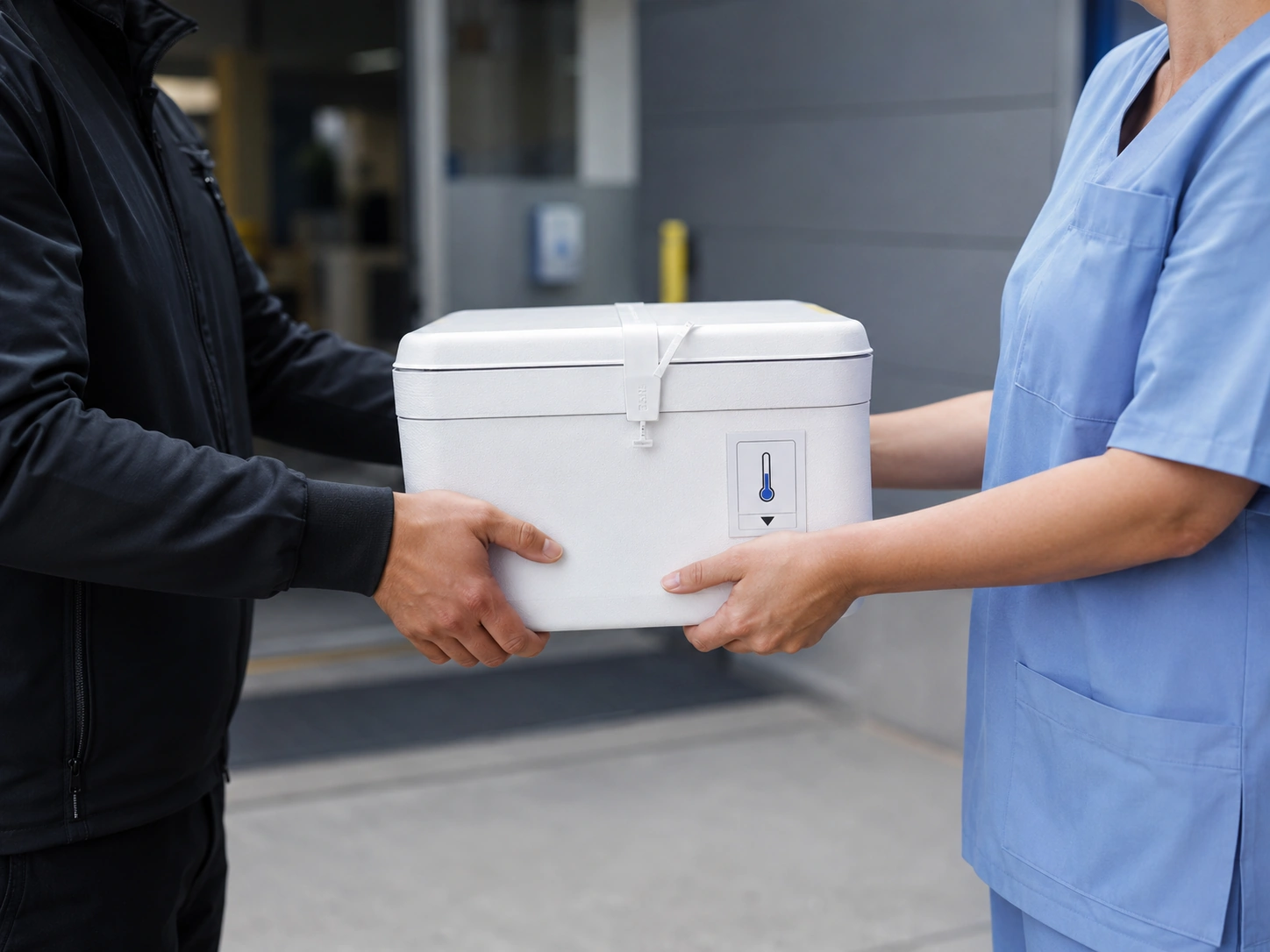
A medical shipment can look ordinary from the outside. Inside may be a blood product, a temperature-sensitive medicine, a cornea, a surgical instrument or a piece of home-health equipment needed that afternoon. In those cases, delivery is not a background service. It is part of the care.
Over the past two years, we have spoken with healthcare-logistics specialists, cold-chain packaging operators and experienced transportation executives. The clearest lesson was also the simplest: healthcare does not merely need a vehicle. It needs a controlled, documented handoff from one responsible person to the next.
A Clock Starts at Pickup
The urgency is easiest to see in transplantation. The United States completed 49,064 organ transplants in 2025. Yet an organ cannot simply wait for the next convenient route. Viability windows are short and unforgiving:
- Hearts and lungs are usually transplanted within six hours of removal.
- Livers and similar organs, within 12 hours.
- Kidneys, within 36 hours.
Blood logistics operates at a different scale but with the same demand for dependable movement. U.S. hospitals need approximately 29,000 units of red blood cells every day. A late shipment is therefore not just a delivery exception on a dashboard. Somewhere downstream, a clinical team may be waiting.
Temperature Is Part of the Product
Time is only one constraint. Many healthcare products must remain inside defined temperature ranges throughout storage and transport. Refrigerated vaccines, for example, are generally stored between 2°C and 8°C. The CDC warns that once potency is lost through improper conditions, it cannot be restored.
That changes the meaning of “proof of delivery.” A photograph at the door is useful, but it may not be enough. The shipper may also need to know who held the shipment, whether the container stayed sealed, what temperatures were recorded and how an exception was handled.
The Container May Be Only 5–10% of the Cost
One cold-chain packaging operator we spoke with had 5,000–6,000 ISO 9001-certified reusable containers in circulation, with a recovery rate above 90%. Its team was expanding from organ transport toward blood-center and pharmacy customers.
Their most revealing observation was economic: packaging represented only about 5–10% of the total logistics cost. In a simplified $100 movement, the container may account for only $5–$10. The remaining $90–$95 sits around it — pickup coordination, qualified labor, transportation, monitoring, handoffs, exception management, documentation and return logistics.
The expensive problem is not building a better box. It is building a system around the box that keeps working when traffic, timing and people do not cooperate.
The Trust Gap Cannot Be Crowdsourced Away
Another logistics veteran gave us a direct warning. For medical supplies or blood samples, businesses will not trust an open pool of everyday drivers without clear training, accountability, insurance and liability protection.
A driver’s personal schedule cannot compete with a clinical deadline.
That feedback matters for Woosh. Crowdsourcing can create flexible capacity, but healthcare requires controlled access to that capacity. The driver must be selected for the shipment, trained for the task and accountable for every handoff.
Where Woosh Can Fit First
The immediate opportunity is not to claim that Woosh is ready to move organs or regulated pharmaceuticals today. It is to begin with healthcare shipments whose value and urgency are high, but whose compliance requirements are manageable: medical equipment, replacement devices, home-health supplies and urgent inter-facility transfers.
Woosh’s current workflow already supports:
- Instant booking
- Live milestone tracking
- Pickup and drop-off photographs
- Signature capture
- A digital chain of custody
This applies to loads up to 250 pounds. Woosh’s business plan estimates that eligible mid-sized shipments can cost 40–55% less than traditional LTL alternatives. For healthcare, however, lower cost must come from better utilization and route density — never from removing controls.
What the Healthcare Version of Woosh Requires
The next layer is more demanding:
- Qualified driver tiers and shipment-specific training
- Documented standard operating procedures
- Appropriate insurance
- Validated cold-chain containers and temperature logs
- Exception playbooks
Refrigerated WooshHubs could condition gel packs, stage secure containers, consolidate local routes and provide backup capacity when a driver is delayed.
That is where the partnership logic becomes powerful: specialized packaging and cold-chain expertise on one side; route orchestration, live visibility and distributed local capacity on the other.
Healthcare taught us that the last mile is not finished when a box reaches the address. It is finished when the right item reaches the right person, within the right window, in the right condition, and the entire journey can be proven.
Enjoyed this? Get Woosh insights on commuting, freight, and smarter logistics in your inbox.
Subscribe to our newsletter